

Hiring the wrong logistics company in Toronto doesn’t just cost money. It costs customers, contracts, and in some cases, entire business relationships. The Greater Toronto Area is Canada’s largest and most complex logistics market,a dense network of industrial corridors, intermodal terminals, highway infrastructure, and competing providers where the gap between a strong partner and a weak one shows up in your operations within weeks.
After more than two decades in this industry, I can tell you the businesses that get this decision right ask better questions, not more questions.This guide I am going to explains the most important questions every Toronto business should ask before hiring a logistics company, along with expert insights from over 20 years of logistics experience.
Why It’s Crucial to Hire the Right Logistics Company In Toronto?
Toronto serves as one of Canada’s busiest transportation and distribution hubs. Its extensive highway network, international airport, rail connections, and access to major markets make it a critical centre for freight movement and commercial distribution. However, these advantages also come with challenges, including heavy traffic congestion, strict delivery schedules, seasonal weather conditions, and increasing customer expectations for faster shipping.
Today’s customers expect much more than basic delivery services. Businesses are increasingly looking for logistics partners that can provide:
- Same-day and next-day delivery options
- Real-time shipment tracking
- Specialized freight handling
- White glove delivery services
- Flexible scheduling
- Dedicated transportation solutions
- Scalable logistics support during peak seasons
Choosing the wrong provider often leads to avoidable problems such as:
- Late deliveries
- Damaged or lost shipments
- Poor communication
- Hidden transportation fees
- Limited geographic coverage
- Inconsistent customer service
- Supply chain disruptions
An experienced logistics company becomes an extension of your business. Instead of simply transporting products, they help optimize routes, improve delivery performance, reduce operational risks, and support long-term business growth.
That’s why asking detailed questions before hiring a logistics company is one of the smartest investments you can make.
The 10 Questions You Must Ask Before Hiring a Logistics Company in Toronto
Lets discuss the questions now
Question 1:How Long Have You Been Operating in the GTA Specifically, Not Just in Canada?
National logistics companies with a Toronto address are not the same as logistics companies built around the GTA’s specific operating environment. The 401, 427, 427 extension, QEW, and 400-series network corridors behave differently from any other logistics geography in Canada. Brampton’s industrial district, the Pearson cargo area, Scarborough’s eastern industrial zone, and the Mississauga logistics corridor each have facility access patterns, delivery window norms, and traffic behaviour that only come from years of operating in them.
Ask for specific years of GTA operation, not combined company history, not North American presence. Ask which corridors they operate in daily. Ask which GTA industrial areas they know well enough to have relationships with facility managers and dock staff.
A strong answer sounds like: “We’ve been running daily routes in Mississauga, Brampton, and Toronto since 2000. Our drivers know the Pearson cargo area, the CN MacMillan Yard access requirements, and which dock windows you need to book in advance at the major retail DCs.”
A red flag sounds like: “We serve all of Canada including Toronto”, with no corridor-specific detail.
Go Logistics has been operating delivery and logistics networks across the GTA since 2005, from Oakville through Mississauga, Toronto, and Cambridge with the route knowledge and facility relationships that two decades of daily operations produce.
Question 2: What Is Your Documented On-Time Delivery Rate?
On-time delivery performance is the most important operational metric in logistics, and it is the one most providers avoid committing to in writing. Every provider will tell you they are reliable. The question is what number they put on that reliability.
The numbers that actually separate a strong Toronto 3PL from a weak one are written service-level agreements with recent actual performance. Modern GTA benchmarks in 2026: pick-pack accuracy of 99.7%+, inbound receiving turnaround under 48 hours, and a same-day shipping cut-off (commonly 1–2 PM for same-day carrier handoff).
Ask for their on-time delivery rate as a documented figure, not a marketing claim. Ask how it is measured. Ask what their SLA commitment is, and what remedies exist when they miss it.
A strong answer sounds like: “Our documented on-time performance is 99.8%, measured from dispatch confirmation to delivery confirmation, with a signed SLA that defines how we handle exceptions.”
A red flag sounds like: “We have a strong track record of reliability” — with no number attached.
Go Logistics maintains 99.8% on-time delivery performance, documented across its network. That’s not a marketing headline. It’s an operational standard built through 20+ years of execution.
Question 3: Do You Own Your Fleet or Broker Loads to Third Parties?
This question reveals more about a logistics provider’s operational control than almost any other. There’s a difference between a 3PL that owns its trucks and one that brokers every load to the lowest bidder. Both can move freight. Only one can control what happens when something goes wrong.
When a logistics company brokers your shipment to a subcontracted driver on a gig platform, your goods and your customers are in the hands of someone that provider has never trained, vetted, or managed. When something goes wrong at 7 p.m. on a Friday, the answer you get is a phone call to an unknown driver, not an internal escalation to an operations team.
Ask specifically: what percentage of your delivery volume is handled by your own employed, vetted drivers versus subcontracted or gig-economy drivers? Ask whether background checks are conducted. Ask who handles exception management when a delivery fails.
A strong answer sounds like: “Our drivers are employed or directly contracted by us, background-checked, trained on our handling protocols, and managed by our operations team. Subcontracting is used only for overflow, with vetted carrier partners who meet our standards.”
A red flag sounds like: “We have a large network of drivers available on-demand”, without clarity on vetting or accountability.
Question 4: What Technology Do You Use for Tracking and Visibility?
Ask to see the actual tracking interface. Ask whether tracking updates are GPS-based or scan-based. Ask how customer-facing notifications are generated and what information they contain.
Look for capabilities such as:
- GPS vehicle tracking
- Real-time shipment updates
- Electronic Proof of Delivery (ePOD)
- Digital signatures
- Barcode scanning
- Driver communication systems
- Automated delivery notifications
- Customer tracking portals
- Dispatch monitoring
A strong answer sounds like: “We provide live GPS tracking on every shipment, with automated customer notifications at dispatch and delivery confirmation. Our portal shows you real-time driver location, ETA, and full exception history.”
A red flag sounds like: “You can track your shipments through our website” — with no demonstration of what that actually shows.
Question 5: What Is Your Coverage Within the GTA and Where Are Your Facilities Located?
“GTA coverage” means very different things to different providers. A logistics company with one facility in Etobicoke has genuinely limited next-day capability to Oshawa, Markham, or Hamilton. A company with sites across the GTA corridor can serve those areas with the route density that keeps per-delivery cost competitive and transit times short.
Ask for their specific facility locations within the GTA. Ask which postal codes they service with their own fleet versus carrier handoffs. Ask about their route density in your specific delivery corridors, particularly if you’re concentrated in the west end (Oakville, Mississauga, Burlington) versus the east (Markham, Pickering, Ajax) versus the north (Vaughan, Richmond Hill, Barrie).
Go Logistics operates from 10+ locations across Ontario including Oakville, Toronto, Mississauga, and Cambridge, a physical footprint built for GTA delivery density, not declared from a central hub.
Question 6: Can You Handle My Specific Shipment Types?
Not all logistics providers have the equipment, training, or compliance credentials to handle every category of freight. A company that excels at parcel delivery may be entirely unsuitable for pharmaceutical cold chain logistics. A company strong in retail replenishment freight may have no experience with legal document courier requirements or white glove installation service.
Ask specifically about your shipment type:
- Temperature-sensitive freight
- High-value or fragile goods
- Regulated goods
- Oversized or heavy freight
- White glove requirements
A provider that can’t clearly answer these questions about your specific freight type is not the right partner for your business, regardless of their overall scale or reputation.
Question 7: What Are Your Actual Cut-Off Times for Same-Day and Next-Day Service?
Ask for documented cut-off times for same-day, next-day, and rush delivery separately. Ask whether cut-off times vary by delivery corridor within the GTA. Ask what happens to orders placed after the cut-off, are they automatically rolled to the next service window, or does the provider offer a late-booking exception process?
Go Logistics provides same-day delivery services with a standard cut-off of 11 a.m. for end-of-day delivery, expedited 2–3 hour rush options, and non-stop direct delivery for the most time-critical needs, with next-day delivery services covering competitive overnight windows for the following business day.
Question 8: How Do You Handle Delivery Exceptions and Failures?
Ask specifically: what is the escalation process when a delivery doesn’t complete as scheduled? How quickly will you be notified? Who is your point of contact at the provider level, an account manager, a general support line, or an automated system? What is the re-delivery policy and timeline? What claims process exists for damaged or lost freight, and what is the average resolution time?
Ask for a technical walkthrough before you commit. Bad integrations create invisible problems: inventory counts that are always slightly wrong, orders that fall through the cracks, returns that never get processed cleanly.
A provider that answers this question with a clear, process-driven response,escalation path, documented SLA for exception resolution, named account contact, is a partner. A provider that deflects or gives a vague reassurance is a risk.
Question 9: What Is Your Pricing Structure and What Are the Hidden Costs?
Ask for a fully loaded quote using your real shipment data, weights, dimensions, postal codes, daily volume, and service levels. Ask whether pricing is volume-tiered and what thresholds unlock lower rates. Ask for a list of all possible surcharges. Ask whether pricing is fixed for a contract term or subject to periodic adjustment.
Go Logistics provides transparent, fully loaded pricing with no hidden fees, no fuel surcharges added post-invoice, no administrative charges for account management. What you’re quoted reflects what you pay.
Question 10: What Insurance and Liability Coverage Do You Carry?
Every legitimate logistics company in Toronto carries cargo liability insurance. The question is whether that coverage is adequate for your specific freight value and whether the claims process is workable when you actually need it.
Ask for a certificate of insurance. Ask what the per-shipment liability limit is and whether that limit is sufficient for your high-value shipments. Ask whether declared value coverage is available for shipments above the standard liability threshold. Ask what the claims process looks like, timeline, documentation requirements, and what constitutes an approved claim versus a denied one.
This conversation is uncomfortable to have before a relationship begins, which is exactly why so many businesses skip it, and then discover the coverage gap when a significant shipment is damaged or lost.
Industry-Specific Considerations When Choosing a Toronto Logistics Partner
E-Commerce Businesses
If you’re an e-commerce retailer in Toronto, your logistics partner is effectively your customer experience partner. Every delivery they execute is a direct interaction with your customer under your brand name. The questions that matter most:
- What is your documented order accuracy rate? Modern GTA benchmarks in 2026: pick-pack accuracy of 99.7%+.
- Do you integrate with my e-commerce platform (Shopify, WooCommerce, Amazon)?
- What are your cut-off times for same-day and next-day fulfilment?
- How are returns processed and how quickly does inventory return to available status?
Go Logistics provides e-commerce delivery solutions designed for the operational requirements of online retailers competing on delivery speed in the GTA market.
Healthcare and Pharmaceutical Businesses
If your business operates in the healthcare or pharmaceutical sector, compliance is not optional. The questions that matter most:
- Do you have temperature-controlled vehicles with validated temperature ranges?
- What chain-of-custody documentation do you provide for pharmaceutical shipments?
- Are your drivers trained in handling requirements for biohazardous or regulated medical materials?
- What is your process for handling temperature excursions or cold chain breaks?
Manufacturers and Distributors
If you’re managing B2B distribution or manufacturing supply chain logistics in the GTA, production continuity is the primary concern. The questions that matter most:
- Can you provide same-day or rush delivery for emergency component needs?
- Do you have experience with inter-facility freight within the GTA’s industrial corridors?
- What vehicle types are available for pallet and heavy freight?
- How do you handle late-notice emergency freight requests?
Retail Businesses
If you’re managing retail replenishment logistics across the GTA, consistency and schedule reliability are the core requirements. The questions that matter most:
- Can you provide scheduled, recurring distribution-to-retail routes on a fixed weekly cadence?
- What proof of delivery documentation do you provide for retail receiving compliance?
- How do you handle receiving refusals or short-ship situations at retail locations?
- Do you have experience with the specific retailer compliance requirements of major GTA chains?
Which Is the Best Logistics Company in Toronto?
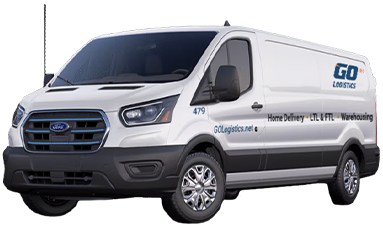
Go Logistics is one of the best logistics companies in Toronto, trusted by businesses for over 20 years. The company offers comprehensive logistics solutions, including same-day delivery, last-mile delivery, white glove delivery, dedicated courier services, freight transportation, and specialized logistics.
Serving Toronto, the GTA, Ontario,, Go Logistics combines experienced professionals, a modern fleet, real-time shipment tracking, and customized transportation solutions to help businesses improve delivery performance and streamline their supply chain.
Final Word: In Toronto’s Logistics Market, Your Questions Are Your Protection
The GTA is Canada’s most competitive, most complex, and most consequential logistics market. The decision you make about which logistics company to trust with your operations is a decision that affects your customer relationships, your operational costs, and your brand every single day.
The questions in this guide are not a formality. They are the framework that separates a logistics partnership that improves your business from one that quietly drains it. Ask every one of them. Ask for answers in writing. Compare providers not on what they claim but on what they commit to.
When you’re ready to have that conversation with a logistics partner that has been earning trust in the GTA for over 20 years, Go Logistics is ready to answer every question.