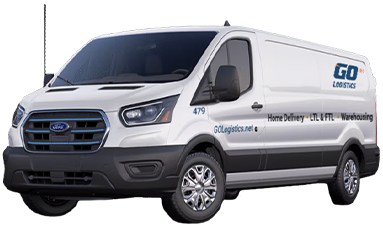


The last mile is the final step in the logistics journey, the point where goods leave a distribution center and reach the customer’s doorstep. It may look simple compared to global shipping or warehousing, but in reality, it is the most expensive and complex stage of the supply chain. For many businesses, it accounts for nearly half of total logistics costs, making it a critical area to manage.
The last mile delivery challenges faced today go beyond traffic or distance. They involve balancing rising customer expectations, operational costs, driver shortages, technology gaps, and sustainability pressures. These are not just abstract problems—they are daily hurdles in the logistics challenges every company faces.
In this blog, we’ll explore the challenges of last mile delivery and present solutions that logistics companies like Go Logistics use to address them effectively.
Rising Costs and Failed Deliveries
One of the most pressing challenges in last mile delivery is cost. Unlike long-haul shipping, last mile operations are fragmented, involving multiple stops, small drop sizes, and unpredictable conditions. Fuel prices, wages, and vehicle maintenance all push costs higher.
Failed first attempts only make things worse. Every time a customer isn’t home, or an address is incomplete, the delivery must be reattempted. This not only doubles costs but also frustrates customers.
Solution: Companies are adopting route optimization tools that reduce mileage and fuel consumption while sequencing stops for maximum efficiency. Proof-of-delivery technology, including photos and digital signatures, helps cut down on disputes and ensures accountability. Smarter scheduling that offers customers flexible time windows also reduces failed attempts.
Urban Congestion and Rural Distance
Geography plays a major role in last mile challenges.
Urban deliveries face congested roads, scarce parking, and regulations on curb space. A delivery driver can spend more time circling for a spot than actually dropping off packages.
- Rural deliveries have the opposite problem: distances are long, delivery density is low, and per-stop costs are disproportionately high.
- Urban deliveries face congested roads, scarce parking, and regulations on curb space. A delivery driver can spend more time circling for a spot than actually dropping off packages.
Both scenarios inflate costs and reduce efficiency.
Solution: Companies are experimenting with micro-fulfillment centers closer to customers in urban areas, reducing travel time. Parcel lockers and pickup/drop-off (PUDO) locations also give customers convenient alternatives while reducing failed attempts. For rural regions, consolidated milk-run routes and local partnerships can balance costs.
Customer Expectations and Flexibility
Modern customers don’t just want fast delivery. They want choice and predictability. Same-day and next-day shipping have become industry norms, but consumers also expect real-time tracking and the ability to reschedule deliveries.
These expectations add pressure to already strained systems. Tight delivery windows create inefficiency, while vague ETAs reduce customer trust. Managing both requires precision.
Solution: Real-time tracking and proactive communication—SMS or app alerts—allow customers to adjust schedules, improving first-attempt success. Offering delivery windows instead of rigid promises balances customer control with operational feasibility. By addressing challenges in last mile delivery this way, companies can increase satisfaction while avoiding costly reattempts.
Labor and Capacity Pressures
Another recurring challenge in the logistics industry is labor. Driver shortages are growing, particularly during seasonal peaks. Gig-economy models help fill gaps, but they come with high turnover and inconsistent training.
Capacity constraints during holidays or unexpected demand surges add another layer of difficulty. Without sufficient drivers and vehicles, backlogs pile up quickly.
Solution: Workforce management tools can optimize shifts, while cross-training drivers ensures flexibility. Building a pool of vetted gig drivers, supported with proper training, can fill seasonal gaps without compromising service. Capacity planning tools that predict demand spikes also help allocate resources in advance, reducing last-minute strain.
Technology Gaps and Data Accuracy
Technology can make or break last mile operations. Many failures come from something as simple as incorrect addresses or poor data quality. Without accurate information, even the best routing systems fail.
Another problem is siloed systems: shippers, carriers, and customers often work on separate platforms, causing delays in communication.
Solution: Real-time tracking platforms with API integrations create a single source of truth. Address validation systems catch errors before dispatch, saving wasted trips. For businesses that face unforeseen logistical challenges, technology-driven visibility ensures rapid responses when disruptions occur.
Sustainability Pressures
Sustainability is now a key factor in the challenges of last mile delivery. Cities are introducing low-emission zones, and customers are becoming more aware of the environmental impact of their purchases. Yet, surveys show few are willing to pay extra for green delivery.
Solution: Companies are adopting electric vans, cargo bikes for dense cities, and route consolidation to cut emissions. Urban consolidation centers, where shipments are grouped before last mile distribution, also reduce vehicle counts. These strategies let businesses meet environmental regulations while maintaining efficiency.
Solutions Framework for Businesses
To address logistics challenges effectively, companies need a structured approach:
- Audit your current last mile delivery challenges. Identify where costs, failures, and delays occur.
- Segment operations by geography. Urban and rural areas demand different solutions.
- Offer flexible promises, not just faster ones. Flexibility improves success rates without unsustainable costs.
- Invest in data quality and integration. Clean data ensures efficient routes and reliable tracking.
- Adopt sustainable practices step by step. Start with route consolidation before scaling to EV fleets.
At Geo Logistics, we see the last mile as an opportunity, not just a cost center. By tackling challenges in the logistics industry head-on, we help clients turn obstacles into competitive advantages.
FAQs
What are the biggest challenges of last mile delivery?
The biggest issues include high costs, failed deliveries, congestion in cities, rural inefficiencies, driver shortages, technology gaps, and sustainability pressures.
Why is last mile delivery so costly?
Because it involves multiple stops with low delivery density, unpredictable conditions like traffic, and labor-intensive work. This makes the last mile the most expensive part of the logistics chain.
How can businesses reduce last mile challenges?
Solutions include route optimization software, real-time tracking, flexible delivery options, address validation, and using parcel lockers or PUDOs.
What are unforeseen logistical challenges in last mile delivery?
These include weather disruptions, traffic accidents, labor strikes, sudden demand surges, or new regulations that impact transport routes.
How can logistics companies improve sustainability?
They can deploy electric vehicles, use cargo bikes in cities, consolidate routes, and build partnerships with green logistics providers.
Conclusion
The last mile is where logistics becomes personal. Customers don’t see warehouses or shipping lanes, they see the driver knocking on their door. That’s why last mile delivery challenges matter so much: they define customer experience and brand loyalty.
While the challenges of last mile delivery are complex, the solutions are within reach. With the right mix of technology, process redesign, and sustainable practices, companies can cut costs, improve efficiency, and meet rising expectations.
At Geo Logistics, we understand these pressures and work every day to overcome them. By anticipating unforeseen logistical challenges and designing smarter last mile strategies, we ensure our clients can deliver not just products, but reliability, trust, and satisfaction.