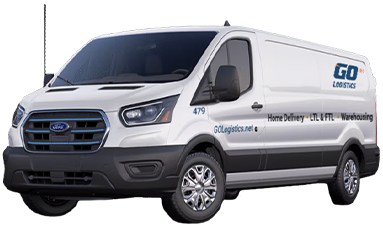


Canada’s small businesses are under real pressure right now. Rising interest rates, shrinking consumer spending, supply chain disruptions, and tightening credit have combined into one of the most challenging economic environments since 2008.
For many small business owners, the question is no longer about growth, it’s about survival. Yet one strategic lever that consistently gets overlooked in a downturn is logistics. Professional logistics support doesn’t just move goods, it controls costs, protects cash flow, and creates the operational resilience that lets small businesses not just survive a recession but position themselves to emerge stronger. In this blog, we break down exactly how.
Key TakeAways
- Why Canada’s current recession is hitting small businesses differently, and harder
- The real cost of poor logistics during an economic downturn
- How professional logistics support reduces overhead, protects margins, and improves cash flow
- The role of last-mile delivery, 3PL partnerships, and supply chain efficiency in recession survival
- How Go Logistics has helped businesses across Canada manage costs and scale smarter
- Specific logistics strategies small businesses can act on today
- Answers to the most commonly asked questions Canadian small business owners are
The Canadian Recession Reality: What Small Businesses Are Actually Facing?
Before we talk about solutions, we need to understand the problem clearly.
Canada entered 2026 in a state of economic fragility. GDP growth has been sluggish, household debt remains near record highs, and the Bank of Canada’s rate hike cycle, while partially unwound, left lasting damage on borrowing costs for small businesses. Inflation may have cooled from its peak, but the cumulative effect on operating costs hasn’t reversed. Fuel costs, labour wages, commercial rents, and the cost of goods have all structurally shifted upward over the past three years.
For small and medium-sized businesses (SMBs), this creates a brutal equation. Revenue growth is slowing. Customers are spending more cautiously. But fixed costs remain stubbornly high.
According to the Canadian Federation of Independent Business (CFIB), a significant percentage of small businesses are still carrying pandemic-era debt while navigating rising operating costs. Many are operating on margins thinner than anything they’ve seen in a generation.
What makes this recession uniquely difficult for Canadian SMBs is the combination of factors hitting simultaneously:
- Reduced consumer confidence pulling down discretionary spending
- Higher cost of debt making working capital management critical
- E-commerce competition from large national and global players with supply chain advantages
- Labour shortages in warehousing, transportation, and distribution
- Cross-border trade uncertainty, particularly with US tariff policy impacting Canadian exporters
In this environment, every dollar of operational waste is a dollar that accelerates the path to insolvency. And nowhere do dollars leak more consistently, and more invisibly than in logistics.
Why Logistics Is the Hidden Driver of Small Business Financial Health?
Most small business owners think about logistics as a cost centre. Ship the product, pay the bill, move on. But after more than 20 years in the logistics industry, I can tell you that perception is one of the most expensive mistakes a business can make, especially during a recession.
Logistics isn’t just transportation. It’s the sum total of how your inventory moves, where it sits, how long it waits, how efficiently it gets packaged, and how reliably it reaches your customer. Each one of those variables has a direct line to your profit and loss statement.
Consider this: in a typical small e-commerce or retail business, logistics costs, including warehousing, packaging, shipping, and returns handling, can represent anywhere from 8% to 20% of revenue. During a period when revenue is under pressure, that percentage grows even if the absolute dollar amount stays flat. Inefficient logistics during a recession doesn’t just cost money, it amplifies every other financial problem the business is experiencing.
The inverse is also true. Businesses that optimize their logistics operations during a downturn gain a structural cost advantage that compounds over time. They can price more competitively, deliver faster, handle returns more efficiently, and free up capital that would otherwise be locked in slow-moving inventory or redundant shipping costs.
This is where professional logistics companies become not just useful, but essential.
The 7 Ways Professional Logistics Support Helps Small Businesses Survive a Canadian Recession
Here’s is what you should note down:
1. Converting Fixed Logistics Costs Into Variable Costs
During uncertain economic periods, financial flexibility becomes one of the most valuable assets a small business can have. Companies that can quickly adjust operating expenses to match demand fluctuations are often better positioned to navigate market volatility without sacrificing service quality or customer satisfaction. A scalable logistics model allows businesses to remain agile while preserving working capital.
Key Benefits for Small Businesses
- Lower overhead during economic slowdowns.
- Improve cash flow management.
- Eliminate major capital investments.
- Scale logistics operations as needed.
- Reduce financial risk during market fluctuations.
2. Reducing Per-Shipment Costs Through Network Scale
When a small business ships independently, it often pays significantly higher rates per package than larger organizations. Professional logistics providers leverage extensive carrier relationships and delivery volume to secure better transportation rates and improve operational efficiency.
Beyond pricing advantages, logistics providers benefit from network density. Their ability to consolidate shipments, optimize delivery routes, and maximize vehicle utilization creates cost efficiencies that individual businesses simply cannot replicate. These savings become increasingly important during economic downturns when protecting profit margins is a top priority.
For small businesses operating on tighter budgets, lower shipping costs can free up capital for marketing, inventory investment, technology upgrades, and customer service improvements. Every dollar saved on logistics contributes directly to financial resilience.
Cost-Saving Advantages
- Access discounted carrier rates.
- Improve transportation efficiency.
- Lower overall fulfillment costs.
- Increase profit margins.
- Strengthen pricing competitiveness.
3. Protecting Cash Flow Through Better Inventory Management
Inventory management plays a critical role in maintaining healthy cash flow during a recession. Excess inventory ties up capital that could otherwise be used for payroll, marketing, or operational expenses. At the same time, insufficient inventory can lead to stockouts, lost sales, and dissatisfied customers.
Modern logistics technology provides businesses with real-time inventory tracking, forecasting tools, and actionable reporting. This allows business owners to make informed purchasing decisions and maintain optimal stock levels without unnecessary risk.
Core Benefits:
- Reduce excess inventory costs.
- Improve forecasting accuracy.
- Prevent costly stockouts.
- Increase supply chain visibility.
- Preserve working capital.
4. Strengthening Customer Retention Through Reliable Delivery Performance
During economic downturns, retaining existing customers becomes more important than acquiring new ones. Customers who consistently receive orders on time are more likely to return, recommend your business, and remain loyal even when reducing overall spending.
Reliable delivery experiences create trust, strengthen brand reputation, and improve customer satisfaction. Businesses that consistently meet customer expectations often outperform competitors that struggle with fulfillment and communication issues.
Customer Retention Benefits
- Increase repeat purchases.
- Improve customer loyalty.
- Strengthen brand trust.
- Reduce customer churn.
- Enhance overall customer experience.
5. Enabling E-Commerce Competitiveness Against Larger Players
Today’s consumers expect fast, convenient, and transparent delivery regardless of company size. Professional logistics support allows small businesses to offer service levels similar to major retailers without making significant infrastructure investments.
This enables smaller companies to compete more effectively, attract new customers, and maintain market share during periods when consumers are actively comparing options and seeking the best value.
Competitive Advantages
- Offer faster delivery options.
- Improve online customer experience.
- Increase conversion rates.
- Expand service coverage.
- Compete with larger retailers.
6. Reducing the Risk and Cost of Returns
Returns are an unavoidable part of modern commerce, particularly in e-commerce environments. Businesses that manage returns efficiently can reduce costs, improve customer satisfaction, and recover inventory faster.
An organized reverse logistics process helps minimize disruptions while providing valuable insights into customer purchasing behavior, product quality concerns, and operational improvements.
Returns Management Benefits
- Lower processing costs.
- Improve customer confidence.
- Speed up inventory recovery.
- Reduce operational inefficiencies.
- Gain valuable customer insights.
7. Freeing Owner Bandwidth to Focus on Revenue Generation
Small business owners often wear multiple hats, especially during challenging economic periods. Managing logistics internally can consume valuable time that could be spent on sales, marketing, customer relationships, and strategic planning.
By partnering with a professional logistics provider, business owners can delegate complex operational responsibilities and focus on activities that directly contribute to revenue growth and long-term business sustainability.
Business Growth Benefits
- Increase focus on sales activities.
- Improve customer engagement.
- Enhance strategic decision-making.
- Reduce operational stress.
- Create more opportunities for growth.
The 3PL Advantage: Why Third-Party Logistics Is a Recession Strategy, Not Just a Service
Third-party logistics providers have historically been associated with large enterprises , companies with complex supply chains and the volume to justify dedicated logistics partnerships. That perception has changed dramatically over the past decade, and the current economic environment is accelerating the shift.
Today’s 3PL providers serve businesses of every size. The economics have changed, the technology has improved, and the market has matured to the point where even a small e-commerce business shipping a few hundred packages per week can access professional logistics infrastructure at a competitive cost.
For small businesses navigating a Canadian recession, the 3PL model offers several specific structural advantages:
No capital commitment
You don’t need to buy trucks, lease warehouses, or hire logistics staff. You access infrastructure that already exists.
Instant scalability
Whether your volume goes up or down, your logistics capability adjusts without the lag and cost of building or dismantling internal capacity.
Technology access
Enterprise-grade tracking, inventory management, and reporting systems are included in the partnership rather than requiring separate investment.
Expertise on demand
Experienced logistics professionals manage carrier relationships, route optimization, regulatory compliance, and exception handling, so you don’t have to develop that expertise internally.
Risk transfer
Many of the operational and liability risks associated with transportation and warehousing transfer to the logistics provider, reducing the small business’s exposure.
Go Logistics has been delivering these advantages to its partners since 2005. Over nearly two decades, it has built a network that has delivered more than 100 million packages, expanded to 10+ sites across Ontario, and developed the kind of deep operational expertise that only comes from sustained execution at scale.
For a small business looking for a logistics partner during a recession, that track record matters.
Sector-Specific Logistics Challenges for Canadian Small Businesses in a Recession

Different types of small businesses face different logistics challenges during an economic downturn. Understanding where your specific vulnerabilities lie is the first step to addressing them.
1. E-Commerce Retailers
The e-commerce sector in Canada grew rapidly during the pandemic, and many small online retailers scaled quickly without building the logistics infrastructure to support that scale. Now, as volume normalizes and margins compress, the inefficiencies in those logistics operations are becoming visible.
Key recession challenges: high per-unit shipping costs, inability to offer competitive delivery speeds, poor returns management, difficulty managing seasonal volume swings.
What professional logistics support delivers: volume-based shipping rates, same-day and next-day delivery capability, integrated returns processing, scalable sortation and dispatch infrastructure.
2. Manufacturers and Distributors
Small Canadian manufacturers face a double squeeze in a recession — input costs remain elevated while customer orders slow. Logistics inefficiency amplifies both problems by adding unnecessary cost and delay between production and delivery.
Key recession challenges: freight cost management, mid-mile delivery reliability, inventory management across multiple customer locations, cross-border shipment complexity.
What professional logistics support delivers: LTL/FTL optimization, dedicated courier services, mid-mile delivery networks, advanced order tracking and exception management.
3. Specialty and Regulated Goods Businesses
Businesses dealing in pharmaceutical products, alcohol, or other regulated goods face compliance requirements that add complexity and cost to logistics operations. During a recession, that complexity becomes more expensive to manage without expert support.
Key recession challenges: regulatory compliance costs, specialized handling requirements, documentation management, restricted delivery windows.
What professional logistics support delivers: compliance-aware logistics planning, specialized handling protocols, experienced driver networks trained in regulated goods delivery.
How to Choose the Right Logistics Partner During a Recession?
Not all logistics providers are equal, and choosing the wrong partner during a recession can compound your problems rather than solve them. Here is what to evaluate when selecting a professional logistics partner in Canada:
Proven Operational Track Record
How many packages have they delivered? What is their on-time performance rate? How long have they been in operation? Longevity and volume track records matter, they indicate the operational systems and expertise that come from sustained real-world execution.
Technology Capability
Does the provider offer real-time tracking, inventory visibility, and order management integration? In 2025, these are baseline requirements, not differentiators.
Geographic Coverage
Does the provider’s network match your delivery requirements? A provider with strong Ontario coverage may not be the right fit if you need national or cross-border capability.
Flexibility and Scalability
Can the provider accommodate volume fluctuations? Is pricing structured in a way that aligns with your business’s variable revenue?
Service Range
Do they offer the specific services your business needs — same-day delivery, white glove services, sortation, warehousing, or specialized handling?
Relationship Quality
Logistics partnerships work best when they are genuine collaborations. Does the provider understand your business? Are they responsive? Do they have people you can actually talk to when something goes wrong?
Go Logistics meets every one of these criteria. With 20+ years of operational history, a diversified fleet, advanced tracking technology, and a service portfolio spanning home delivery, e-commerce delivery, mid-mile delivery, white glove services, and warehousing, Go Logistics offers small businesses a complete logistics infrastructure built on a foundation of proven execution.
Practical Logistics Strategies for Small Businesses Facing Recession Pressure Right Now
If you’re a small business owner reading this in the middle of a cash flow squeeze, you don’t just need a strategic framework, you need actionable steps. Here are specific logistics actions you can take right now to improve your financial position:
Audit Your Current Shipping Costs
Pull your last three months of shipping invoices and calculate your actual cost per shipment, cost per kilogram, and cost as a percentage of revenue. Most small businesses have never done this analysis, and the results are almost always surprising.
Identify Your Highest-Cost Delivery Corridors
Not all your shipping lanes are equally expensive. Find the corridors where you’re paying the most and evaluate whether a logistics partner with better network density in those areas could deliver cost savings.
Review Your Inventory Turnover Rate
Calculate how many days of inventory you’re carrying on average. In a recession, reducing this number — even slightly — frees up meaningful working capital.
Evaluate Your Returns Process Cost
How much does it cost you, fully loaded, to process a return? If you don’t know the answer, you’re almost certainly underestimating it.
Request a Logistics Cost Analysis from a Professional Provider
Most established 3PL providers including Go Logistics will conduct an initial assessment of your logistics operations and identify specific savings opportunities. There is no cost to understanding what’s possible.
Discuss Recession-Specific Pricing Options
Talk to your logistics partner about recession-specific pricing options. Volume guarantees, flexible capacity agreements, and consolidated shipment pricing can all reduce your logistics costs during a period of lower volume.
The Go Logistics Difference: Built for Businesses Like Yours
Since 2005, Go Logistics has helped businesses access reliable, scalable, and cost-effective logistics solutions. With more than 100 million packages delivered and experience supporting major brands such as Best Buy, Shopify, Molson Coors, and C.H. Robinson, Go Logistics brings proven expertise to businesses of every size.
More than just a logistics provider, Go Logistics helps businesses improve operational efficiency, manage costs, enhance customer experiences, and support long-term growth—even during challenging economic conditions.
Go Logistics Services Include:
- Same-day Delivery
- Next-day delivery
- Final mile and last-mile delivery
- Sortation services
- Rush Delivery Services
- White glove delivery and installation
- Mid-mile transportation
- Warehousing and distribution
- Dedicated courier services
- E-commerce delivery solutions
Every service is supported by advanced logistics technology, a highly vetted driver network, and over 20 years of industry experience, helping businesses stay competitive through every stage of the economic cycle.
If your business is feeling the pressure of Canada’s current economic environment, the conversation with Go Logistics starts with a quote. One conversation could change the financial trajectory of your business in 2025 and beyond.
Frequently Asked Questions
How Can Small Businesses Reduce Logistics Costs During a Recession in Canada?
The most effective strategy is to partner with a third-party logistics provider (3PL) that can convert your fixed logistics costs into variable costs, negotiate better carrier rates through volume consolidation, and optimize your delivery routes and inventory management. Conducting a detailed logistics audit to identify your highest-cost operations is the essential first step.
What Is the Best Logistics Strategy for a Small Business in an Economic Downturn?
The best recession logistics strategy focuses on three priorities: cost variability (converting fixed logistics costs to pay-per-use), inventory efficiency (reducing capital locked in slow-moving stock), and customer retention (maintaining delivery reliability even as you cut costs elsewhere). A professional 3PL partner is the most direct way to achieve all three simultaneously.
Should a Small Business Outsource Logistics During a Recession?
Yes, in most cases. Outsourcing logistics to a 3PL during a recession reduces fixed costs, eliminates capital expenditure on fleet and warehousing, and provides access to professional logistics expertise and technology that most small businesses cannot afford to maintain internally. The cost savings from outsourcing typically far exceed the partnership cost.
How Does Last-Mile Delivery Affect Small Business Profitability in Canada?
Last-mile delivery is typically the most expensive segment of the supply chain, in many cases representing 40–53% of total shipping costs. For small businesses, inefficient last-mile operations directly compress margins. Partnering with a provider that has optimized last-mile networks, like Go Logistics, can dramatically reduce these costs through route optimization, load consolidation, and network density.
What Are the Signs That a Small Business Needs a Logistics Overhaul?
Key indicators include: logistics costs growing as a percentage of revenue, increasing customer complaints about delivery times or accuracy, high returns rates, inventory stockouts or overstock situations, owner/management time being consumed by logistics problem-solving, and inability to meet customer delivery expectations at a competitive price.
How Does a 3PL Help With Cash Flow for Small Businesses?
A 3PL improves cash flow in several ways: converting fixed warehouse and fleet costs to variable pay-per-use fees, reducing inventory carrying costs through better inventory management, accelerating the returns cycle to free up working capital, and enabling faster order fulfilment which speeds up the cash conversion cycle.
Is Professional Logistics Support Affordable for Small Businesses in Canada?
Modern 3PL pricing is designed to be scalable and accessible to businesses of all sizes. Because costs are volume-based, small businesses pay proportionally to the service they use. In most cases, the cost savings from lower per-shipment rates, reduced warehousing costs, and improved efficiency more than offset the 3PL partnership cost making professional logistics support net cash flow positive for most small businesses.
What Is the Difference Between a Courier Service and a 3PL Provider?
A courier service moves packages from point A to point B. A 3PL provider manages the entire logistics operation warehousing, inventory management, order processing, sortation, dispatch, final-mile delivery, and returns handling. For a small business in a recession, the comprehensive operational support of a 3PL delivers far more value than a simple courier relationship.
How Can E-Commerce Businesses Compete With Amazon During a Recession?
E-commerce small businesses can compete with Amazon by partnering with a 3PL that offers comparable delivery speeds (same-day and next-day), reliable tracking, and efficient returns handling without the cost of building that infrastructure internally. Go Logistics provides exactly this kind of enterprise-grade e-commerce logistics capability to businesses of all sizes.
What Logistics Services Are Most Important for Small Businesses in Ontario During a Recession?
For Ontario small businesses, the highest-priority logistics services in a recession are last-mile delivery (for cost efficiency and customer retention), sortation (for e-commerce volume management), same-day delivery (for competitive differentiation), and returns management (for cash flow protection). Go Logistics offers all of these through its Ontario-wide network.
How Does Professional Logistics Support Affect Customer Retention?
Delivery experience is consistently ranked among the top factors in customer loyalty for Canadian consumers. On-time delivery, accurate tracking, and efficient returns processing directly improve repeat purchase rates. Professional logistics providers invest in the technology and operational discipline to deliver these experiences at scale which translates directly to better customer retention for the businesses they serve.
What Should Small Businesses Look for in a Logistics Partner in Canada?
Look for proven operational track record, geographic coverage matching your delivery needs, technology capabilities including real-time tracking and inventory management, flexible pricing that scales with your volume, a comprehensive service range, and a genuine understanding of your business challenges. Go Logistics offers all of these, backed by 20+ years of logistics experience and 100+ million packages delivered.
Conclusion: The Value of Professional Logistics
Recessions are brutal. They strip away the advantages that come from momentum and market tailwinds, and they expose the operational vulnerabilities that good times allow businesses to ignore. For Canadian small businesses in 2025, the pressure is real and the margin for error is thin.
Professional logistics support is one of the most direct and actionable investments a small business can make to improve its competitive position during a downturn. It reduces costs, protects cash flow, strengthens customer relationships, and frees the business owner to focus on what matters most, keeping the business alive, keeping customers loyal, and positioning for the recovery that always follows the recession.
Go Logistics has been a trusted partner to businesses navigating exactly these kinds of challenges since 2005. If you’re ready to understand what professional logistics support could mean for your business, the conversation starts with a single step.